 Amsterdam Windmill Tours
The Best Windmills to Visit in Zaanse Schans, One by One
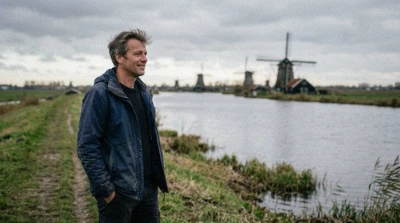
Picking the best windmills to visit in Zaanse Schans comes down to what you want to watch being made. Ten mills stand on this bend of the Zaan and six open their doors: one grinds chalk and lapis into paint, one saws logs the way a 1680 mill did, one has milled mustard since 1786, and two press oil from seed and shut for the winter. Entry is €7.50 at each door, or €15 for all of them. This is what is behind each one, and which to choose if you only have time for one. The Amsterdam windmill tour comparison covers the trips that include a mill entry in the ticket.
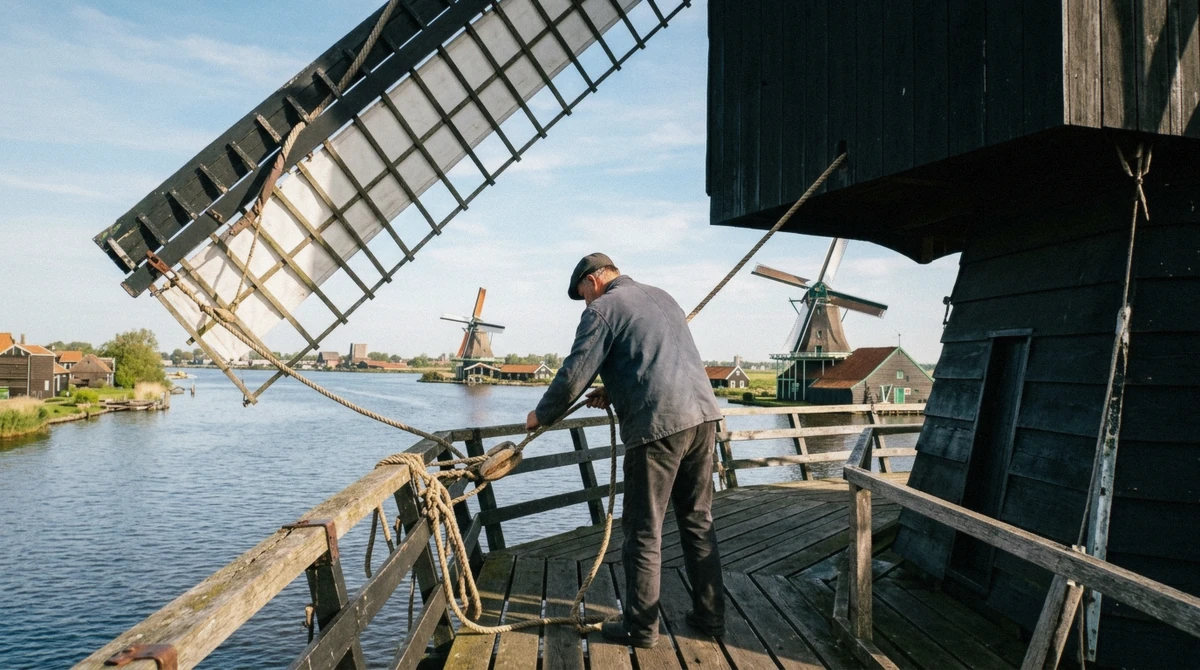
Quick answer
Six mills at Zaanse Schans open to visitors: De Kat, Het Jonge Schaap, De Huisman, De Zoeker, De Bonte Hen and Het Klaverblad. If you enter only one, make it De Kat, the last working paint mill in the world, open daily from 9:00 to 16:30, where stone runners crush chalk and lapis into pigment and the outside platform gives you the whole row of mills. Entry is €7.50 for adults and €3.75 for ages 4 to 17, or €15 for the combination ticket covering every mill open that day.
Key takeaways
- De Kat: paint pigment, daily 9:00 to 16:30, the one to pick if you enter a single mill
- Het Jonge Schaap: sawmill, a 2007 rebuild of a 1680 design, daily 9:30 to 16:30
- De Huisman: mustard and spices since 1786, daily 10:00 to 17:00, the smallest
- De Zoeker (around 1610) and De Bonte Hen: oil mills, both closed November through March
- Het Klaverblad: a replica hollow post sawmill whose sails first turned in 2005
- €7.50 per mill, or €15 for all of them plus the mill museum
The Six Mills at a Glance
What Each One Makes, and When It Opens
Opening hours belong to the mills rather than the village, and they are not identical. Two of them disappear entirely for the winter.
| Mill | What it makes | Built | Open |
|---|---|---|---|
| De Kat | Paint pigment from chalk and stone | 1780s | Daily 9:00 to 16:30 |
| Het Jonge Schaap | Sawn timber | 2007 rebuild of a 1680 mill | Daily 9:30 to 16:30 |
| De Huisman | Mustard and spices | 1786 | Daily 10:00 to 17:00 |
| De Zoeker | Oil pressed from seed | Around 1610 | Closed November to March |
| De Bonte Hen | Oil pressed from seed | 17th century | March to November, Tue, Fri, Sat, Sun 10:00 to 17:00 |
| Het Klaverblad | Sawn timber | Replica, sails turning since 2005 | Seasonal, ask at the gate |
De Kat: The Last Paint Mill on Earth
Two stone edge runners the height of a person turn slowly in a circular timber trough, crushing whatever the miller is working that week into powder. Chalk for white, ochre for yellow, and on a good day lapis lazuli for the blue that Dutch Golden Age painters bought by the thimble.
The pigments are still sold from the mill, mostly to restorers and artists, which is why this qualifies as a working mill rather than a demonstration. You get an information sheet in your language, and the stairs up to the outside platform give the best view in the village: the whole row of mills lined up along the Zaan with the polder behind.
The climb is steep and narrow, so it rules out very young children and anyone unsteady on stairs. The ground floor is worth the ticket on its own.
Het Jonge Schaap: The One Rebuilt From Drawings
The original stood from 1680 until 1942. In 2007 it was rebuilt on the site from the original drawings and measurements, and it saws timber again with a frame saw driven straight off the wind shaft.
Watching a log go through is the most physically impressive thing at Zaanse Schans: the whole building shakes, the blades rise and fall, and the pace is set by how hard the wind is blowing that morning. Millers here tend to be talkative and will stop to explain the gearing if you ask.
Of the six, this is the one that best explains why the Zaan region built ships faster than anyone in the seventeenth century.
The Other Four
De Huisman, De Zoeker, De Bonte Hen, Het Klaverblad
De Huisman is the small one on the dike, milling mustard and spices since 1786 and selling the mustard at the door. It takes ten minutes to visit and the smell arrives before you do.
De Zoeker, built around 1610, is an oil mill: seed goes under stampers and comes out as oil, in a process that is loud, greasy and completely unlike anything else on the site. De Bonte Hen does the same job. Both shut from November through March, and De Bonte Hen keeps to Tuesday, Friday, Saturday and Sunday for the rest of the year.
Het Klaverblad is the newcomer, a replica hollow post sawmill whose sails first turned in 2005. Purists sniff at it. It saws wood.
- De Huisman: ten minutes, mustard for sale, open daily 10:00 to 17:00
- De Zoeker: oil from seed, around 1610, summer only
- De Bonte Hen: oil, four days a week from March to November
- Het Klaverblad: sawmill replica, opening days vary with the miller
Which to Choose With Limited Time
The coach tours give you about two hours on the ground, which means one mill and a walk. Coming by train gives you four, which means three mills and lunch.
| Time on site | What to do | Cost per adult |
|---|---|---|
| 1 hour | The dike path and the Julianabrug view, no interiors | Free |
| 2 hours | De Kat, then the clog workshop and the cheese farm | €7.50 |
| 4 hours | De Kat, Het Jonge Schaap, De Huisman, plus the mill museum | €15 combination |
| A full day | All six open mills, the mill museum and the Zaans Museum | €15 plus museum entry |
How a Smock Mill Works, Briefly
All six are smock mills: an octagonal timber tower with a rotating cap on top, so the miller turns only the cap and the sails into the wind rather than the whole building.
The sails drive a horizontal wind shaft, which turns a brake wheel, which drives the vertical shaft down through the building. Whatever sits at the bottom, stone runners, stampers or a saw frame, does the work. The miller controls speed by furling and unfurling canvas on the sail frames, and stops the mill with a wooden brake band around the wheel.
Watch the sails for a minute before going in. If they are turning fast, the machinery inside will be loud and the visit worth double.
- Cap and sails rotate to face the wind; the tower stays put
- Canvas on the sail frames is the throttle
- A wooden brake band around the brake wheel is the only brake
- Too much wind and the miller stops the mill; too little and nothing turns
Practical Things Worth Knowing
Mills stop when the wind is too strong, and they stop when it is absent. Neither is a refund situation and both are part of visiting a machine that runs on weather.
The stairs inside every mill are steep, narrow and often little more than a ladder with pretensions. Bags on your back rather than your shoulder, and hold the rope. Millers work in these buildings while you walk through them, so keep to the marked floors.
- Bring a card: the mills take nothing else
- Buy the €15 combination if you plan on two or more
- Go to De Kat first, before the coaches land at 10:30
- Check the gate board for which mills are turning that day
- Leave the large backpack at the hotel, the stairs are tight
Getting There and What It All Costs
The village is 17 minutes from Amsterdam Centraal by train to Zaandijk Zaanse Schans, then a ten-minute walk over the Julianabrug, with every route and fare set out separately.
Entry to the village is free, and the full ticket structure, including the two competing combination tickets, sits in the cost breakdown. If you would rather have the admissions settled in one payment, the max-16 small group tour includes De Kat along with the clog workshop and the cheese farm.
The Four Mills You Cannot Enter
Ten mills stand on the site and six open, which leaves four that people photograph and never get into.
De Gekroonde Poelenburg is a paulownia sawmill on the river frontage, moved here in 1963 and kept as a monument rather than a working exhibit. De Ooievaar and De Bleeke Dood, the older flour mill up the road in Zaandijk, are in private or occasional use. Het Prinsenhof, a drainage mill, works the water rather than a millstone.
They are worth knowing about for one practical reason: from the dike path you cannot tell which mills open, and people waste twenty minutes walking to a door that has never been open to visitors. The gate board lists what is running each day, and the six named above are the ones with a ticket desk.
Which Mill Should You Enter
If You only have time for one
De Kat. Paint pigment, an outside platform, and it opens at 9:00 before anything else does.
If You want the loudest, most physical machine
Het Jonge Schaap, where a frame saw cuts logs at whatever pace the wind sets.
If You are visiting between November and March
De Kat, Het Jonge Schaap or De Huisman: the two oil mills are shut.
If You have children who lose interest fast
De Huisman. Ten minutes, strong smells, mustard to buy at the door.
If You want to see everything turning
The €15 combination ticket, and start at 9:00 rather than after lunch.
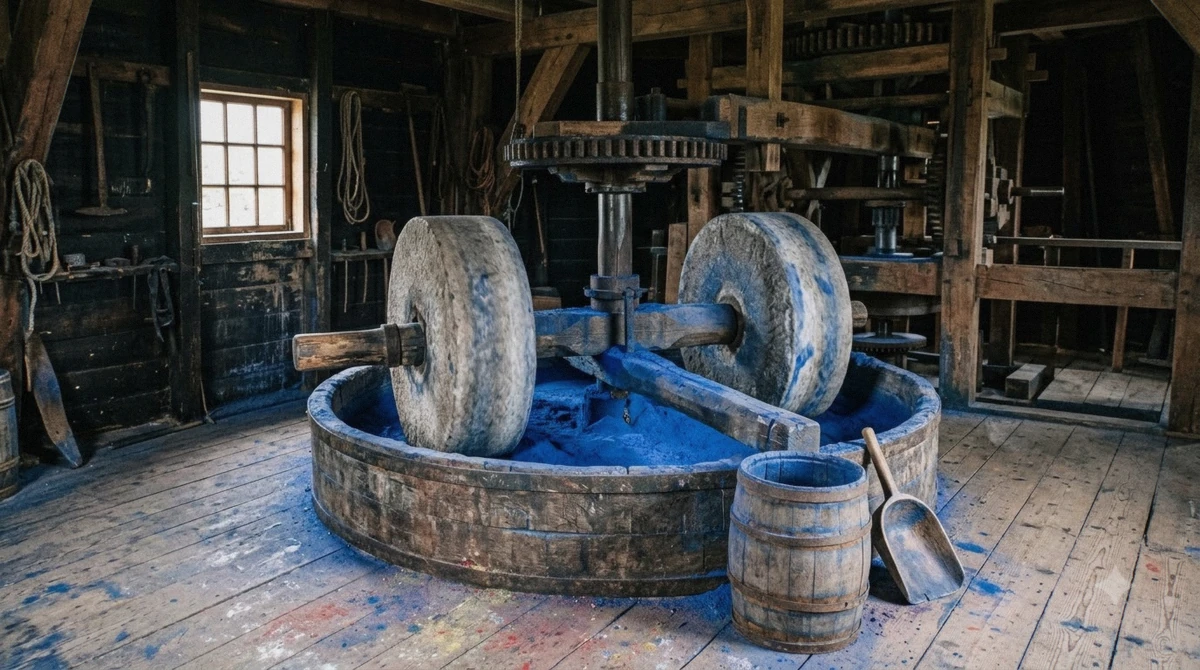
De Kat, mid-grind. The blue is real lapis, and the mill still sells what it makes.
Questions About the Mills
Which windmills can you go inside at Zaanse Schans?
Six of the ten: De Kat, Het Jonge Schaap, De Huisman, De Zoeker, De Bonte Hen and Het Klaverblad. The other four are private or closed to visitors. Entry is €7.50 for adults at each door, or €15 for a combination ticket covering all of them plus the mill museum.
Which windmill is the best one to visit?
De Kat. It is the last working paint mill in the world, opens at 9:00 before the coaches arrive, and the platform outside gives the whole row of mills along the Zaan. Het Jonge Schaap is the better choice if you would rather watch a frame saw cut a log.
What does each windmill at Zaanse Schans make?
De Kat grinds paint pigment, Het Jonge Schaap and Het Klaverblad saw timber, De Huisman mills mustard and spices, and De Zoeker and De Bonte Hen press oil from seed. All six sell what they produce at the door.
Are the windmills open in winter?
Some. De Kat, Het Jonge Schaap and De Huisman run all year, while De Zoeker and De Bonte Hen close from November through March. Winter also brings a fraction of the crowds, so three working mills to yourself is a fair trade.
How much does it cost to enter a windmill?
€7.50 for adults and €3.75 for ages 4 to 17 at each mill. The De Zaansche Molen combination ticket is €15 adult and €7.50 youth and covers every mill open that day plus the mill museum, so it pays off at the second one.
How long does it take to visit a windmill?
Fifteen to twenty minutes each, including the climb. Three mills, the mill museum and a coffee fill about four hours, which is the natural length of a visit arriving by train.
Are the windmills accessible for wheelchairs or pushchairs?
The village paths are flat and manageable, but the mill interiors are not. Every one of them is entered by steep, narrow stairs closer to a ladder than a staircase. The workshops, the cheese farm and the museums are the accessible parts of the site.