 Amsterdam Windmill Tours
Zaanse Schans or Kinderdijk: Which Windmills Are Worth Your Day
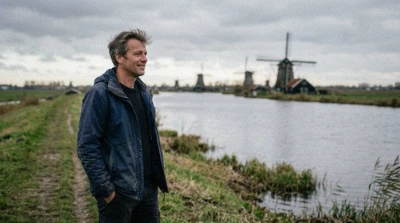
Choosing between Zaanse Schans or Kinderdijk is really a choice between two different things that both have sails. Zaanse Schans is a working industrial village 17 minutes from Amsterdam Centraal, free to enter, where mills grind pigment and mustard and you can walk inside them. Kinderdijk is nineteen drainage mills standing in a line across an empty polder near Rotterdam, a UNESCO site since 1997, about 100 kilometres away and charging around €18 to get in. Neither is better. They answer different questions.
Quick answer
From Amsterdam, take Zaanse Schans. It is 17 minutes by train, free to walk into, and six of its ten mills open their doors so you can watch them work. Kinderdijk has more mills in one frame, nineteen of them from around 1740, and a UNESCO listing to go with the silence, but it sits about 100 kilometres south near Rotterdam and charges roughly €18 to enter. Base yourself in Rotterdam and the answer flips.
Key takeaways
- Zaanse Schans: 10 mills, 6 open inside, free entry, 17 minutes from Amsterdam Centraal
- Kinderdijk: 19 mills from around 1740, UNESCO listed in 1997, about €18 to enter
- Kinderdijk is roughly 100 km from Amsterdam, an hour and a half each way by road
- From Rotterdam, the waterbus reaches Kinderdijk in about 30 minutes for around €4.80
- No Amsterdam day tour on this site goes to Kinderdijk; all of them go north to the Zaan
- Windmill day trips from Amsterdam start at $34 and reach Zaanse Schans plus the fishing villages
The Two Places, Head to Head
Zaanse Schans
- Ten historic mills; six open to visitors
- Free to walk in, €7.50 per mill interior
- 17 minutes by train from Amsterdam Centraal
- Working industry: paint pigment, mustard, oil, sawn timber
- Cheese farm, clog workshop and four museums on site
- 2.6 million visitors in 2024, busy from 10:30
Kinderdijk
- Nineteen mills built around 1740, UNESCO listed 1997
- Around €18 to €21 for adults, no free village to walk
- About 100 km from Amsterdam; 30 minutes by waterbus from Rotterdam
- Drainage, not manufacturing: these mills pumped a polder dry
- Two museum mills, a visitor centre, very little retail
- Quieter, flatter, emptier, and far better for a long walk
Verdict Staying in Amsterdam, go to Zaanse Schans and go early. Staying in Rotterdam or The Hague, go to Kinderdijk and take the waterbus. Trying to do both from Amsterdam in one day means five hours in transit for two short stops, and we would not.
What Each Place Is Actually For
Zaanse Schans Made Things
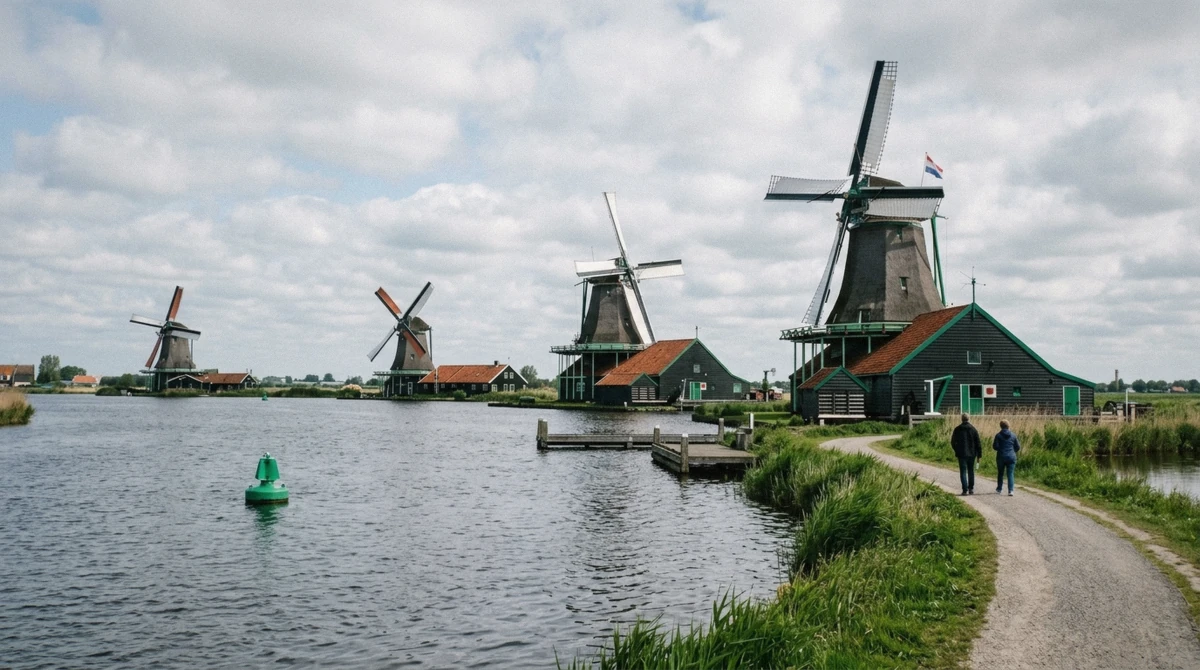
The Zaan was Western Europe's first industrial region, and at its peak around a thousand windmills worked this river. They were factories: crushing chalk and lapis into paint pigment, pressing linseed for oil, milling mustard seed, sawing the timber that built the Dutch fleet.
Six of the survivors still do it, and you can stand next to the machinery while they do. That is the specific pleasure of the place, and it is why two hours outside the buildings misses the point entirely. Which mill does what, and when each one opens, is set out in the six mills you can go inside.
- De Kat: paint pigment, the last working paint mill anywhere
- Het Jonge Schaap: a 1680 sawmill rebuilt from the original drawings
- De Huisman: mustard and spices since 1786
- De Zoeker and De Bonte Hen: oil pressed from seed, closed in winter
Kinderdijk Moved Water
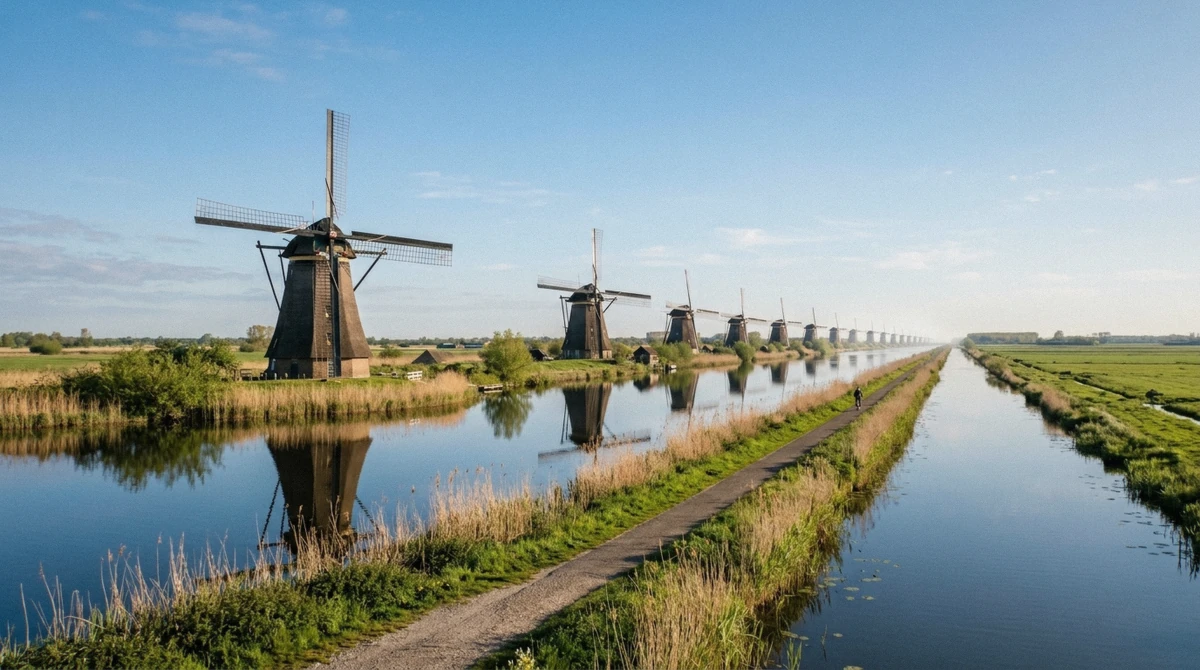
Kinderdijk never made anything. Its nineteen mills, built around 1740, existed to pump water out of the Alblasserwaard polder and keep the land above the rivers, which is the older and more Dutch problem of the two.
They stand along two straight canals in open country, which is why every photograph of Kinderdijk looks the same and why it still works: nineteen mills in one frame, sails against a huge sky, no shops in the way. Two are open as museum mills. UNESCO listed the site in 1997.
The silence is the attraction. If what you want from Dutch windmills is landscape rather than machinery, Kinderdijk is the better place and it is not close.
Costs and Journeys, Compared
The numbers are what usually settle this, especially from an Amsterdam hotel.
| Zaanse Schans | Kinderdijk | |
|---|---|---|
| Distance from Amsterdam | 18 km | About 100 km |
| Travel time each way | 17 min by train | About 1 h 30 by road |
| Transport cost from Amsterdam | About €9.40 return | €30 or more by train and bus |
| Entry | Free village; €7.50 per mill | About €18 to €21 per adult |
| Mills you can enter | Six | Two museum mills |
| From Rotterdam | Two hours away | 30 min by waterbus, about €4.80 |
| Best for | Working machinery, a half day, families | Landscape, walking, photography |
Practical Answers
Can You Do Both in One Day?
From Amsterdam, technically yes and practically no. The two sites sit on opposite sides of the country's busiest motorway corridor, roughly two and a half hours apart by public transport, and you would spend five hours travelling to spend ninety minutes at each.
If you have two days and want both, do Zaanse Schans on a morning from Amsterdam and Kinderdijk from Rotterdam on the day you head south. Reaching Kinderdijk from Rotterdam takes about 30 minutes on waterbus line 21 for roughly €4.80, which is the cheapest and most enjoyable approach to any windmill site in the country.
A Day at Each, Hour by Hour
The shape of the two visits differs as much as the mills do. One is a half day with buildings to enter; the other is a walk with a view that changes slowly.
| Zaanse Schans from Amsterdam | Kinderdijk from Rotterdam | |
|---|---|---|
| Leave | 08:40 train from Centraal | 09:30 waterbus from Erasmusbrug |
| Arrive | 09:10, over the Julianabrug | 10:00 at the visitor centre |
| First hour | De Kat before the coaches | The full nineteen-mill view along the canal |
| Middle | Two more mills, cheese farm, clog workshop | Two museum mills and the pumping station |
| Lunch | Pancakes at De Kraai | Cafe at the visitor centre, or a picnic |
| Back by | 13:30 | 15:00 |
| Cost per adult | About €17 with one mill | About €23 with the waterbus |
Which Suits Children, and Which Suits Photographers
Children do better at Zaanse Schans. There are animals in the field, clogs being carved, cheese to taste, a pancake restaurant, and buildings to go inside when it rains. Kinderdijk is a long flat walk beside water with two mills to enter, which is a harder sell at eight years old.
Photographers should go to Kinderdijk. Nineteen mills, no shops, no coaches parked in the frame, and low sun across an empty polder in the hour before sunset. At Zaanse Schans the equivalent shot is from the Julianabrug before half past nine, and there is a coach in it by ten.
- Travelling with children: Zaanse Schans, arrive at opening
- Serious about photographs: Kinderdijk, late afternoon, from Rotterdam
- Only one free day in Amsterdam: Zaanse Schans, no contest
- Already going to Rotterdam or Dordrecht: Kinderdijk by waterbus
- Want fishing villages too: a coach tour to the Amsterdam windmills covering up to four stops
The Third Option Nobody Mentions
Amsterdam itself keeps a few mills, and they cost nothing to look at. De Gooyer stands on Funenkade with the Brouwerij 't IJ taproom in the old bathhouse at its foot. Molen van Sloten in the south-west runs guided tours every hour from 10:00 and is the only mill inside the city you can enter. Krijtmolen d'Admiraal, a chalk mill from 1792, sits in Amsterdam-Noord.
None of them replaces a proper windmill site. All three fit into an afternoon on a bicycle, which makes them the right answer when the weather is bad or the day is short.
What Each Place Does Badly
Zaanse Schans is crowded from half past ten and sells a great deal of fridge magnets. It is also compact enough that a busy day feels busy everywhere at once, and the coach car park sits within sight of the mills.
Kinderdijk is remote, charges to enter, and gives you two interiors rather than six. In poor weather it offers almost no shelter, and the walk between the far mills is long enough that families with small children turn back.
Neither problem is hidden. Pick the one whose weakness you mind less.
If You Only Get One Windmill Day, Read This
Most visitors to the Netherlands get exactly one. Spend it at Zaanse Schans if you are sleeping in Amsterdam, because the maths is brutal: 34 minutes of travel in total against three hours, for a site where six buildings open instead of two.
Spend it at Kinderdijk if you are sleeping anywhere south of Gouda, or if what you actually want is the photograph everyone has seen, with nineteen mills receding down a canal and nothing man-made in the frame except the mills.
The practical detail that decides it for a lot of people is the early start. Zaanse Schans rewards being there at nine, which is easy from an Amsterdam hotel and impossible from one in Rotterdam. How to get there and what it costs covers the trains, and the ticket structure explains why the free village still ends up costing €15 if you want to go inside more than one mill.
Pick One in Thirty Seconds
If You are based in Amsterdam with one free morning
Zaanse Schans. Seventeen minutes, free entry, six mills you can walk into.
If You are based in Rotterdam, Dordrecht or The Hague
Kinderdijk, by waterbus line 21, about 30 minutes and €4.80 each way.
If You want the classic nineteen-mill photograph
Kinderdijk, late afternoon, when the sun comes down the line of canals.
If You are travelling with children
Zaanse Schans: animals, clogs, cheese, pancakes and buildings to shelter in.
If You want windmills plus fishing villages
Neither on foot: take a coach tour to the Amsterdam windmills that adds Volendam and Marken.
Zaanse Schans wins on access and machinery. Kinderdijk wins on landscape. The distance from your hotel usually settles it.
Zaanse Schans and Kinderdijk: Common Questions
Which is better, Zaanse Schans or Kinderdijk?
Zaanse Schans if you are based in Amsterdam and want to see mills working from the inside, since it is 17 minutes away and free to enter. Kinderdijk if you want landscape and quiet, and especially if you are staying in Rotterdam, where the waterbus reaches it in about 30 minutes.
How far is Kinderdijk from Amsterdam?
About 100 kilometres, an hour and a half each way by road, and longer by public transport with changes through Rotterdam. No day tour on this site goes there from Amsterdam; they all run north to the Zaan.
Is Kinderdijk worth visiting?
Yes, on its own terms. Nineteen mills from around 1740 standing in an empty polder, UNESCO listed in 1997, with almost no retail and a long walk beside the water. It is the better site for photographs and the weaker one for a family morning.
Which has more windmills?
Kinderdijk, with nineteen against ten at Zaanse Schans. Zaanse Schans opens six of its mills to visitors, though, against two museum mills at Kinderdijk, so you can go inside more of them.
How much does Kinderdijk cost?
Around €18 to €21 for an adult in 2026, with weekday rates lower than weekends, and the site is open daily from 9:00 to 17:30 in the main season. Zaanse Schans by contrast charges nothing to enter and €7.50 per mill interior, which is set out in the full cost breakdown.
Can you visit both Zaanse Schans and Kinderdijk in one day?
Not sensibly from Amsterdam. They are about two and a half hours apart by public transport, so a combined day is five hours of travelling for two short visits. Split them across two days, with Kinderdijk from Rotterdam.
Do any Amsterdam tours go to Kinderdijk?
Some operators sell one, but none of the trips we compare do; every windmill tour from Amsterdam on this site goes north to Zaanse Schans. From Amsterdam, Kinderdijk is better done independently via Rotterdam.